
0 ItemsView Cart


Updated on June 05, 2026
Good soundproofing depends on installation as much as materials. A quality product installed with gaps, unsealed areas, or in the wrong sequence will underperform. This checklist gives contractors a practical reference for residential and commercial soundproofing projects from pre-installation planning through final inspection.
Before you start any project:
- Identify the noise problem before choosing materials
- Treat the full assembly, not just one surface
- Seal every gap, seam, and hole
- Check for flanking paths before closing walls
- Confirm the scope covers electrical, HVAC, and plumbing if present
Before You Start: Pre-Installation Planning
The most common soundproofing failures start before installation begins. Skipping the planning phase can lead to wrong product selection, missed areas for unwanted sound to enter or exit, and results that fall short of what the client expected.
Use this planning phase to confirm the noise type, review the existing assembly, and set clear goals with the client before materials are ordered or installed.
- Identify the Type of Noise
Not all noise problems have the same solution. Before you select a product, identify how sound is moving through the space. Most contractor projects involve one or more of these noise types:- Airborne noise: Voices, music, and mechanical sound traveling through the air
- Impact noise: Footsteps, dropped objects, and vibration moving through the structure
- Flanking noise: Sound traveling around the treated surface through floors, ceilings, or adjacent walls
A wall treatment will not fix an impact noise problem coming through the floor. A floor underlayment will not stop airborne sound from passing through a shared wall. The right material depends on how sound is moving through the space. For a deeper breakdown of sound paths and material types, see our Guide to Soundproofing
- Review the Assembly
Before any work starts, analyze your space.- What is the wall, floor, or ceiling made of?
- Is there existing insulation? What type?
- Are there electrical outlets, light fixtures, or plumbing in the assembly?
- Is this a fire-rated assembly?
For more detail on how soundproofing materials work within a full assembly, review our soundproofing assemblies guide. If the project involves floor noise, review the floor soundproofing assemblies guide before creating your plan or selecting materials.
- Confirm the Scope With the Client
- Which rooms or surfaces are included in the project?
- What is the noise reduction goal?
- Are permits required for this scope of work?
Get the scope in writing. Noise reduction goals that are not documented before work starts can become disputes after work is done.
Wall Installation Checklist
- Remove existing drywall if insulation needs to be added or replaced
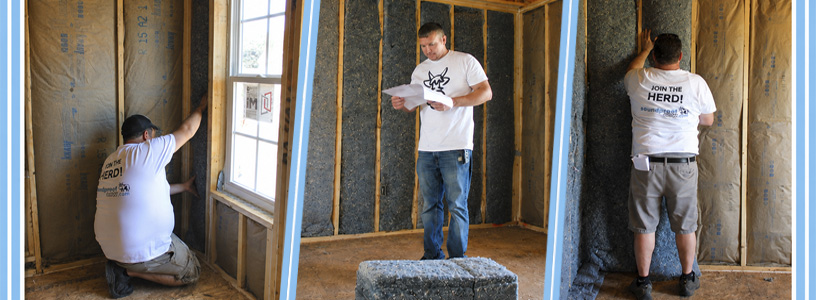
- Install soundproofing insulation in the full cavity with no gaps between batts
- Add mass loaded vinyl over studs or between drywall layers, if specified
- Use acoustic sealant around all exposed areas and gaps, including outlets, switches, and pipes
- Install outlet boxes with acoustic putty pads or covers
- Seal all seams and perimeter edges with acoustic sealant before finishing
- Avoid rigid connections that transfer vibration if decoupling is part of the plan
Electrical outlets and switch boxes are among the most common sources of sound leakage in an otherwise solid wall assembly. Do not skip acoustic sealant, putty pads, or covers on these.
* Standard caulk is not a substitute for acoustic sealant. Acoustic sealant stays flexible as the building moves, while standard caulk can crack over time and reopen gaps in the assembly.
Ceiling Installation Checklist
- Identify whether the ceiling is below another occupied floor or an attic space
- Install soundproofing insulation in the full joist cavity
- Address any HVAC ducts, light fixtures, or recessed cans in the ceiling plane
- Seal all gaps before closing the ceiling
- If impact noise is the primary concern, confirm whether the solution needs to address the floor above, not just the ceiling below
Recessed lighting and HVAC openings are two of the most common flanking paths in ceiling assemblies. Treating the insulation cavity while leaving these open will limit results.
Floor Installation Checklist
- Identify whether the issue is impact noise, airborne noise, or both
- Install underlayment beneath finished flooring if impact noise is the target
- Confirm subfloor condition before adding material layers
- Address transitions, thresholds, and perimeter edges
Perimeter edges and transitions are easy to overlook and common sources of flanking noise in floor assemblies. Treat them as part of the installation, not an afterthought.
Common Installation Failures to Avoid
Most soundproofing failures come down to installation gaps, not product quality. These are the most common mistakes.
- Leaving gaps between insulation batts
- Skipping acoustic sealant around outlets and switches
- Ignoring the ceiling or floor when treating a shared wall
- Failing to address HVAC ducts as a flanking path
- Using standard caulk instead of acoustic sealant
- Compressing insulation, which reduces its acoustic performance
- Treating only one surface in an assembly that requires treatment on both sides
A final review should focus on the full sound path. If sound can still move through gaps, seams, vents, outlets, or connected surfaces, the assembly may not perform as expected.
How Soundproof Cow Supports Contractors
Soundproof Cow provides product guidance by assembly type and noise problem. Whether you are working on a residential wall, a commercial ceiling, or an industrial mechanical room, our team can help you identify the right materials before the job starts.
We provide material specifications you can reference during planning and installation, and we support projects across residential, commercial, and industrial projects.
Working on a soundproofing project? Contact Soundproof Cow before the job starts. We can help you identify the right products for the assembly, the noise type, and the scope of work. Call our team today.

About Ryan Ingram