
0 ItemsView Cart

March 21, 2026
The Challenge
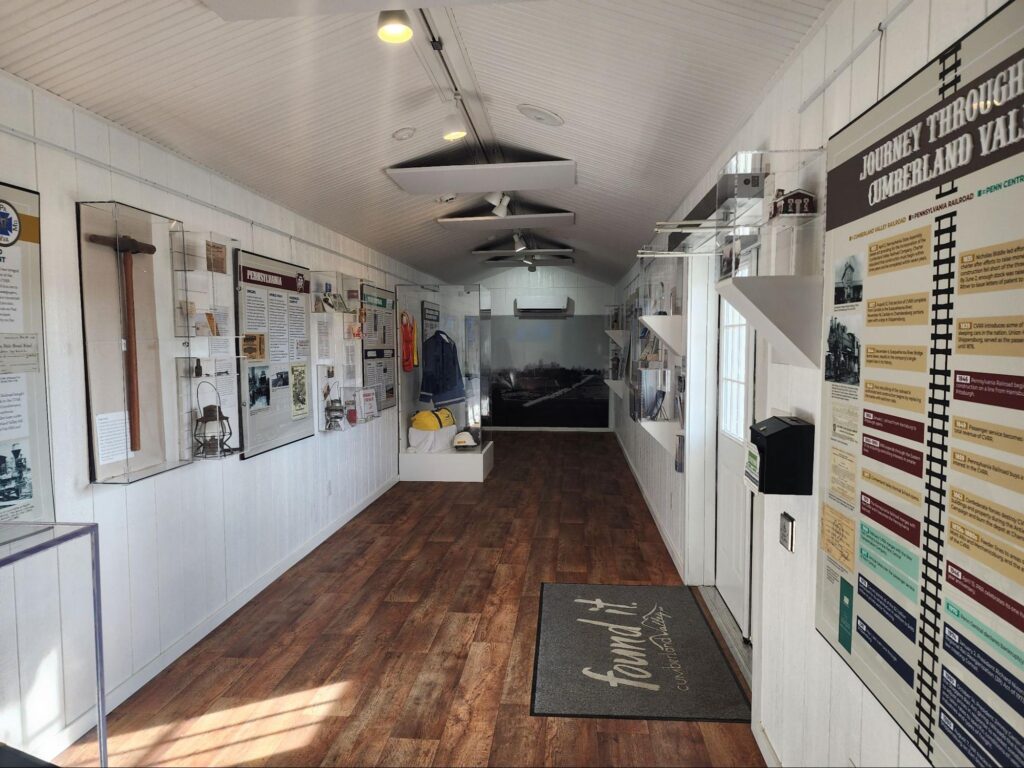
The Conrail Historical Society operates out of the historic Shippensburg Station, where preserved metal railcars have been converted into public museum spaces. Each car functions as a self-contained exhibit environment with artifacts, interpretive displays, and educational kiosks. But these cars were built to haul freight, not host visitors.
Steel walls. Curved ceilings. Parallel surfaces. This type of environment is not conducive to an enjoyable experience. Before treatment, reverberation times in the railcars exceeded 2.4 seconds. In an enclosed metal corridor, that means overlapping reflections, degraded speech intelligibility, and visitor fatigue that sets in before they have made it past the first exhibit.
The complication: these are historic structures. Wall space is claimed almost entirely by artifacts and displays acquired for the project. Any treatment that altered the visual character of the railcars was off the table.
The Relationship
This project carries personal significance for Soundproof Cow. Founder Mike Lehman had a longstanding appreciation for railway history, and when the opportunity arose to partner with the Conrail Historical Society, the fit was immediate. It is the kind of project that reflects what we are here to do: preserve what matters, fix what is broken, and leave things better than we found them.
The Solution
Each railcar received 120 square feet of acoustic treatment, divided between two product types.
For the small theater area in each car, custom-sized Udderly Quiet Acoustic Art Panels were fabricated to fit around the concealed bench seating where visitors watch videos on the history and significance of the Conrail railroad project. Sizing each panel to the available space maximized the acoustic treatment while working within the constraints of the theater footprint.
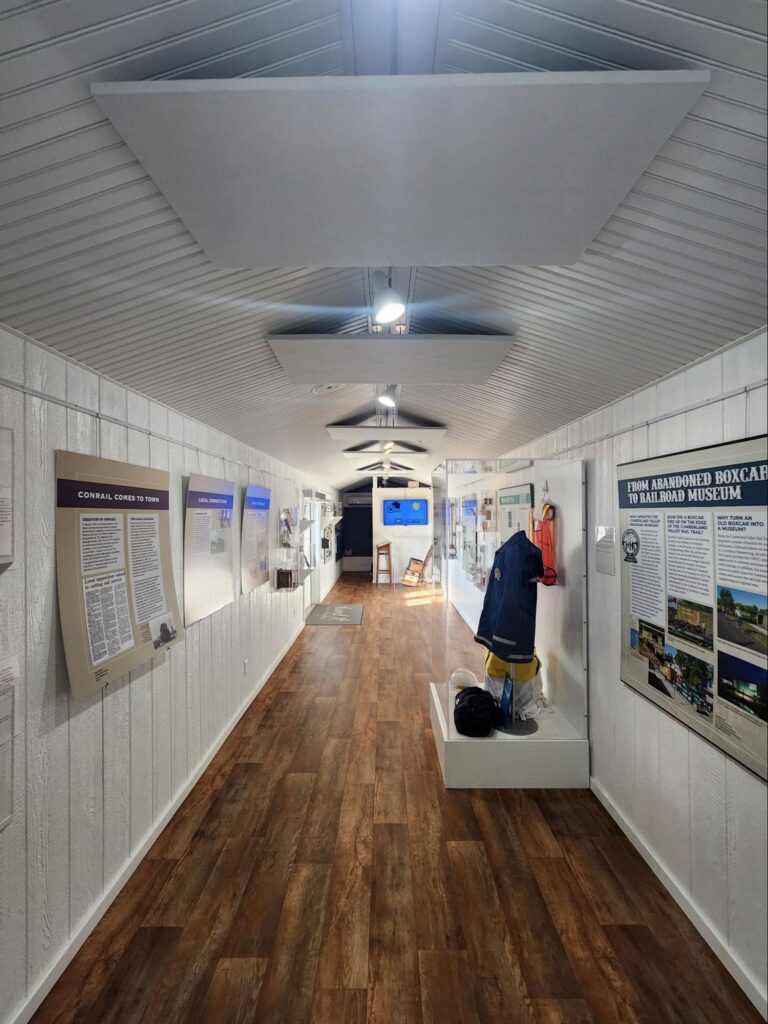
The remaining 84 square feet of treatment per car came in the form of fourteen 2′ x 3′ Udderly Quiet 200 Series Panels, mounted directly to the ceiling. Ceiling placement was the key strategic decision: it preserved the wall space needed for exhibits while effectively reducing the reverberation caused by the railcar’s metal construction. Panel positioning was tailored to each individual car, since every space had its own configuration of artifacts and kiosks. The ability to customize both panel sizes and fabric options was essential to making the treatment work within each unique environment.
The Results
Reverberation time (RT60) dropped from more than 2.4 seconds to approximately 1.38 seconds, a reduction of over one full second.
That is not a subtle improvement. The space is measurably more comfortable when multiple visitors are present. Visitors can engage with content without straining to hear it, and the acoustic environment no longer works against the museum experience it was designed to support.
And none of it is visible. Walk through the railcars today and you will not notice the treatment. The historic character of the cars is fully intact. The acoustic intervention is virtually unnoticeable to the casual observer, which was the entire point.
The Takeaway
Strategic ceiling-mounted treatment can deliver meaningful reverberation reduction while leaving wall-based exhibits completely untouched. Custom fabrication was not a luxury in this project, it was the only way to make it work.
Explore the Conrail Historical Society Museum
The Conrail Historical Society Museum continues to preserve and interpret the history of Conrail and American rail transportation through exhibits, artifacts, and educational programming. Visitors can explore the museum’s collections and learn more about its mission through the organization’s official websites:
For those who cannot visit in person, the museum also offers a virtual tour that allows visitors to walk through the railcars and exhibits online: https://cvrailroadmuseum.org/virtual-tour/
One highlight of the museum’s storytelling is the history of the preserved railcars themselves. The following short documentary shares the story behind one of the boxcars featured in the museum’s exhibits: https://www.youtube.com/watch?v=0v4NBYlK_s4
Get in Touch
Need help with your own soundproofing project? Give us a call at 866-405-7794 or submit a contact form.

About Ryan Ingram