0 ItemsView Cart

Updated on September 04, 2026
Sound moves through walls, ceilings, and floors by vibrating the structure and the air inside it. Insulation placed in wall and ceiling cavities reduces the sound energy traveling through those cavities, supporting better transmission loss between rooms.
This guide covers the main types of insulation used for soundproofing like fiberglass, mineral wool, and cotton. We’ll discuss how they compare, and how to choose the right one for your situation. If you’re looking for a broader overview of soundproofing materials beyond cavity insulation, see our complete soundproofing materials guide.
Shop Quiet Batt® Sound Insulation
Choosing the Best Sound Insulation
In most residential and commercial wall/ceiling cavities, the best sound insulation material is a dense, fibrous insulation (cotton or mineral wool-style), installed to a snug friction fit with no gaps.
If your goal is sound reduction between rooms (not just reducing echo inside one room), insulation works best when paired with:
- air sealing (acoustic caulk)
- added mass (extra layers, barriers)
- decoupling (clips/channel or isolation systems)
How Soundproofing Insulation Works
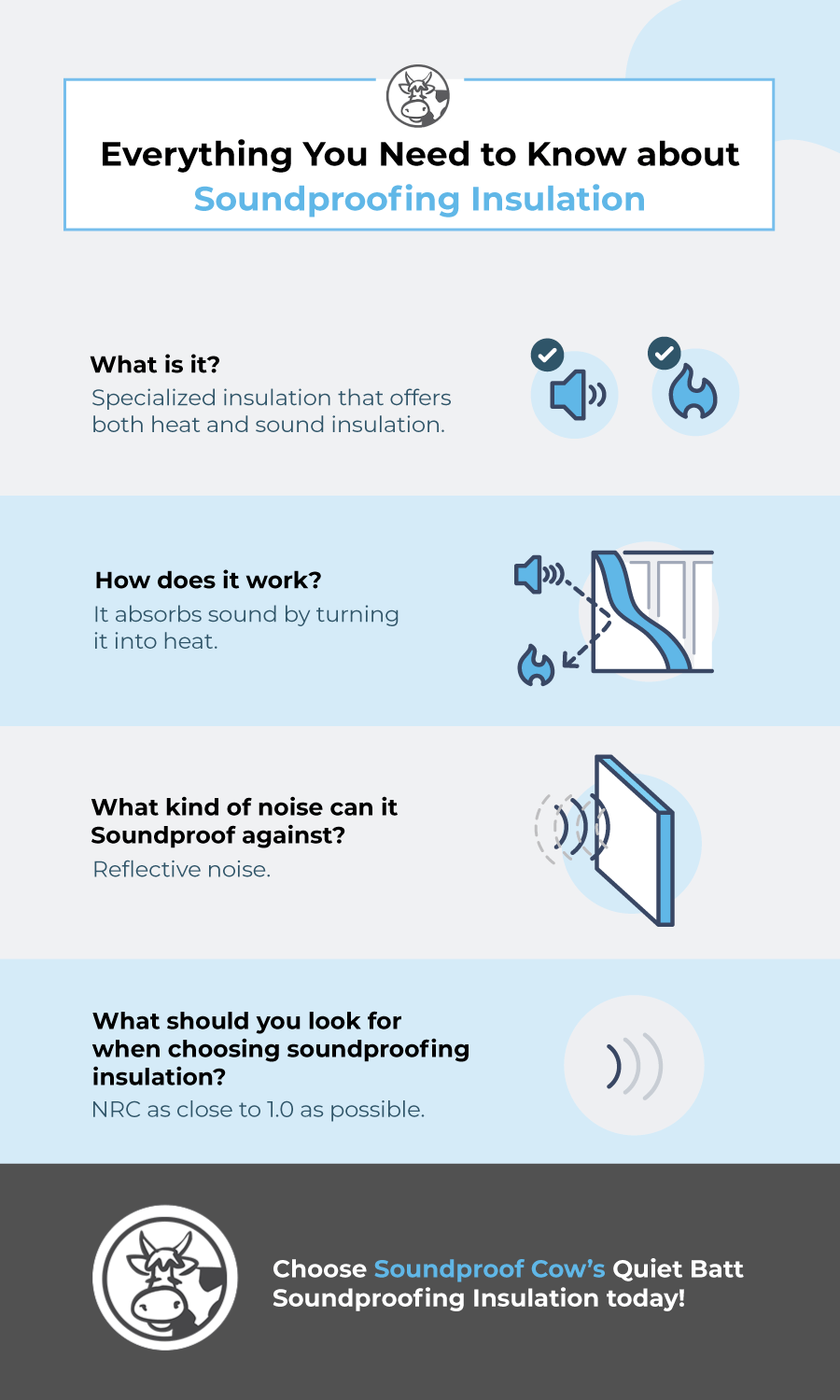
Insulation reduces sound in two ways. First, the fibrous material absorbs sound energy passing through the cavity, converting it to small amounts of heat. Second, by filling the cavity completely, it eliminates the air column that would otherwise allow sound to resonate freely between wall surfaces.
The result is improved transmission loss — less sound passing from one room to the next. Insulation is measured for this using NRC (Noise Reduction Coefficient), which rates how well a material absorbs sound on a scale of 0 to 1. A higher NRC means more absorption within the cavity.
Insulation alone does not fully soundproof a wall. Effective assemblies combine insulation with added mass (extra drywall layers or barrier material), decoupling (isolation clips or channels), and thorough air sealing. Insulation is one layer of a system, not a complete solution by itself.
One important distinction: insulation in wall cavities reduces sound transmission between rooms. It does not significantly reduce echo or reverberation within a room. For in-room acoustic treatment, absorption panels are the right tool.
Best Insulation for Soundproofing
While the specific properties vary by material, the most effective soundproofing insulation types are fiberglass, mineral wool, and cotton.
When choosing a soundproofing material, the best acoustic insulation types are fiberglass, mineral wool and cotton. Each has unique qualities that make them effective choices to soundproof your space.
Fiberglass
Fiberglass insulation is one of the best options for soundproofing a space. It’s made of spun or blown glass filaments and typically contains 30% to 50% recycled glass material. Fiberglass is fire-retardant and can reduce energy costs by creating a barrier between internal and external temperatures.
You can purchase fiberglass insulation in batts or have it blown into a space to fill it completely. It’s often chosen as the best option for soundproofing insulation because it’s easy to install and budget-friendly.
Mineral Wool
Mineral wool is a fiber-based inorganic insulation material. Most mineral wool comes from either natural stone fibers sourced from volcanic rock or the spinning slag that comes as a byproduct of steel production.
Searching for mineral wool, you’ll find that there are two grades — high-performance and multi-purpose. High-performance mineral wool insulation is more expensive and features an NRC between 0.95 and 1.05. Multi-purpose mineral wool insulation is more affordable, but its NRC maxes out around 0.8-0.9.
Cotton
Cotton soundproofing insulation is the lightest and most affordable option and it offers high sound-absorbing capabilities. Plus, cotton is much safer for sensitive skin than mineral wool or fiberglass.
Cotton offers a unique ability to absorb high frequencies. Light, fluffy cotton fibers are multi-dimensional and fairly dense, meaning there is plenty of material to trap sound coming from numerous angles. A two-inch cotton insulation panel’s NRC rating can be as high as 1.0. Cotton soundproofing batt insulation is available in standard stud widths and installs the same way as fiberglass or mineral wool batts.
Fiberglass vs. Mineral Wool: Which Is Better for Soundproofing?
Both fiberglass and mineral wool are effective in wall cavities, and for most residential applications the difference in acoustic performance is smaller than the marketing suggests. The more meaningful differences are in handling, moisture resistance, and cost.
Mineral wool (including products like Rockwool Safe’n’Sound and Rockwool ComfortBatt) is denser than standard fiberglass batts, which gives it a slight acoustic edge in most assemblies. High-performance mineral wool carries an NRC of 0.95–1.05. It is also naturally fire-resistant and handles moisture better than fiberglass, making it a better choice for basement walls, exterior walls, and any assembly where moisture is a concern.
Fiberglass is the more budget-friendly option and is widely available. Sound attenuation batts (SABs), also called sound attenuation insulation (fiberglass insulation designed specifically for acoustic performance) perform comparably to mineral wool in many assemblies and are the standard spec in commercial construction. Standard fiberglass batts perform less well acoustically than SABs or mineral wool.
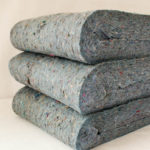
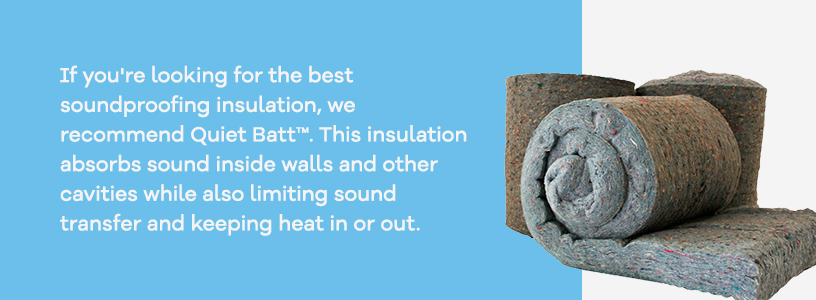
Cotton insulation like Quiet Batt® offers NRC performance comparable to high-end mineral wool (0.95) with easier, itch-free handling — no gloves or protective gear required. It is the best choice when DIY installation is a priority or where skin sensitivity is a concern.
How to Choose the Right Insulation for Your Project
If you’re comparing the best insulation for sound reduction, use these decision points:
What type of noise is bothering you?
- Voices/TV (airborne)
- Footsteps/dropped items (impact)
- Equipment vibration (mechanical)
Where are you installing it?
- Interior wall cavity
- Basement/garage ceiling joists
- Floor cavity between levels
What constraints do you have?
- Moisture/humidity (basement, exterior wall)
- Fire/safety requirements
- DIY handling preference (itch-free vs protective gear)
- Budget and availability
How important is “blocking sound” vs “reducing echo”?
- Blocking sound usually requires additional mass/decoupling
- Reducing echo often benefits more from in-room acoustic treatments
Quiet Batt® Soundproofing Insulation
If you’re looking for the best soundproofing insulation, we recommend Quiet Batt®. This insulation absorbs sound inside walls and other cavities while also limiting sound transfer and keeping heat in or out. With an NRC rating of 0.95, Quiet Batt® Soundproofing Insulation absorbs nearly every soundwave it interacts with.
So, what makes Quiet Batt® unique? This insulation stands out with a variety of distinct features and benefits:
- Eco-consciousness: Quiet Batt® features 80% recycled cotton fibers.
- Safe handling: Its soft cotton fibers make Quiet Batt® an itch-free product you can handle without gloves.
- Ease of installation: Quiet Batt® installs between wood or steel studs without the need for additional tools.
- Low flammability: With a Class A flammability rating, Quiet Batt® offers premier safety performance.
Insulate Your Home With the Soundproof Cow
Soundproof Cow is a company dedicated to helping homeowners and business owners create quieter rooms where people enjoy spending time. Our Quiet Batt® Soundproofing Insulation offers high-level acoustic performance while providing other benefits like energy efficiency, fire safety and easy installation.
If you’re not sure which insulation is right for your project, give us a call at 866-949-9269 or submit a free acoustic analysis and we’ll help you find the right fit.
Frequently Asked Questions
What is sound insulation?
Sound insulation is material installed inside wall cavities, ceiling assemblies, and floor systems to reduce the amount of sound that passes between rooms or floors. It works by absorbing sound energy within the cavity rather than allowing it to resonate freely through the air gap between wall surfaces. The terms acoustic insulation, soundproofing insulation, sound dampening insulation, and sound insulation are often used interchangeably. All refer to fibrous cavity insulation materials such as mineral wool, fiberglass, and cotton used to improve a building assembly’s transmission loss.
Is rockwool or fiberglass better for soundproofing?
For most wall assemblies, mineral wool (including Rockwool products like Safe’n’Sound and ComfortBatt) has a slight acoustic edge over standard fiberglass due to its higher density. High-performance mineral wool carries an NRC of 0.95–1.05. However, fiberglass sound attenuation batts (SABs) — fiberglass insulation specifically designed for acoustic performance — perform comparably to mineral wool in many assemblies and are the standard in commercial construction. The more meaningful differences between the two are moisture resistance (mineral wool handles moisture better), handling (fiberglass requires more protective gear), and cost (fiberglass is typically less expensive).
Is R11 or R13 better for soundproofing?
R-value measures thermal resistance, not acoustic performance — so R11 vs R13 is not the right comparison for soundproofing. What matters acoustically is the material type and density, not the R-value. A dense, fibrous insulation like Quiet Batt® (R-13) or mineral wool will outperform a standard R-13 fiberglass batt in the same cavity. If soundproofing is the goal, prioritize NRC rating and material density over R-value.
Does acoustic insulation really work?
Yes, but with important limits. Insulation in wall and ceiling cavities meaningfully improves transmission loss — the STC improvement from adding quality insulation to an empty stud cavity is typically 5 to 10 points. However, insulation alone cannot fully soundproof a wall. Significant noise reduction requires a complete assembly: insulation plus added mass, decoupling, and airtight sealing. Insulation is one part of that system, not a standalone solution.
What are the drawbacks of soundproof insulation?
The main limitation is that insulation addresses only part of the noise problem. It reduces sound traveling through the cavity but does not stop sound that flanks around the assembly through gaps, penetrations, or structural connections. Standard insulation also does not address impact noise effectively — footsteps and dropped objects require an underlayment or decoupling solution, not just cavity insulation. Finally, insulation must be installed without gaps or compression to perform as rated — voids and compressed batts reduce acoustic effectiveness.

About Kellen Beaver