Sound is a lot like water. It doesn’t have a shape or form and always takes the path of least resistance. Like water, sound can be absorbed by some materials and contained by others. This is why both soundproofing materials and sound-absorbing materials co-exist and serve separate purposes.
What’s the Difference Between Soundproofing and Sound Absorption?
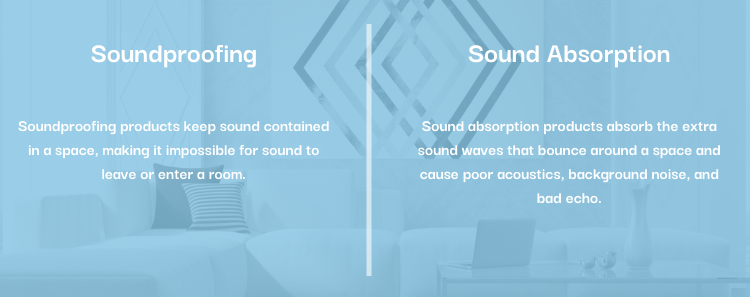
Soundproofing refers to methods and materials used to reduce sound transmission from one space to another. Sound absorption products absorb sound waves that bounce around a room and create background noise, echo, and poor acoustics.
Soundproofing products are what you want if you’re looking to keep what happens in your conference rooms confidenstial. On the other hand, sound absorption products don’t stop sound from traveling into adjoining rooms, but they do drastically improve speech intelligibility and the sound quality within rooms and other enclosed spaces.
In an attempt to rid yourself of unwanted noises quickly, you could erroneously mix up these terms and invest in the wrong material for your home or business.While sound-blocking and sound-absorbing materials are often used together to address different aspects of a noise problem, each serves a distinct purpose and is suited to different applications.
We have outlined everything you need to know about sound absorbing vs. soundproofing below.
Sound Absorption
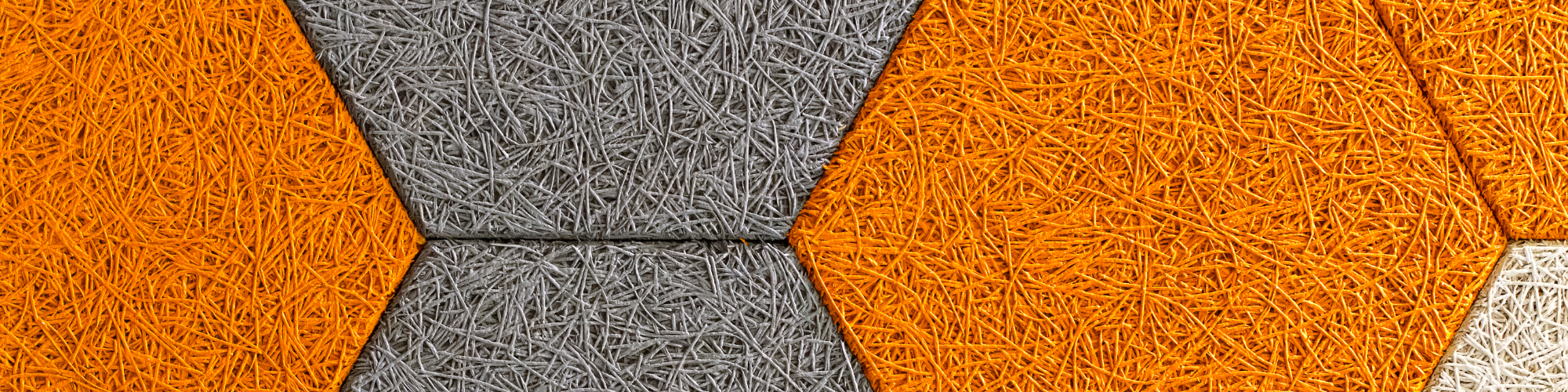
Absorption refers to the process by which sound-absorbing material takes in the energy of a sound wave, rather than reflecting the energy. This effectively reduces the level of echo and sound waves that travel within your space. So if you want to be able to hear more clearly within your space, sound absorption materials are your go-to solution.
Sound absorption products are not ideal for an individual who wants to block noise from entering or leaving their home. Sound absorption products do not stop sound from traveling. They absorb frequencies to improve the acoustical properties heard from within the room.
Foam and sponges soften the surfaces in a space, making them excellent sound absorption materials. In effect, this dampens the production of airborne sounds.
Sound absorption treatments, which are generally made of soft materials like fabric or foam, work by trapping sound waves. Porous materials have microscopic openings that absorb the sound waves the same way a sponge absorbs water.
The trapped energy of the sound waves converts into heat as the absorbent foam makes it impossible for the waves to bounce onto another surface. As a result, the environment becomes more quiet and reverberations and echoes are reduced. The sound absorption materials actually change the acoustic energy of the sound into heat, causing the molecules to vibrate. As long as the sound in the room is powerful enough, the molecules will move and become caught in the sound absorption product.
The performance of sound-absorbing materials is measured using the Noise Reduction Coefficient (NRC). A higher NRC indicates that a material absorbs more sound rather than reflecting it back into the room.
Common Applications of Sound Absorption
A variety of sound absorption products have been used in the following industries and buildings that require noise reduction effects:
Restaurants: A dining experience can quickly become chaotic due to the excess noise of various conversations and clattering plates. Proper sound absorption materials prevent these sounds from bouncing around the room and improve the dining experience for customers.
Open offices: Collaborative work environments with open layouts can often be loud and produce echoes. Sound absorbers can reduce the noise of phone calls and meetings, allowing for better concentration.
Concert halls: Sound absorption materials are typically used where higher acoustic quality is needed, such as in concert halls, theaters and broadcasting studios. Sound absorption products help balance sound and enhance clarity in these spaces.
Soundproofing
Soundproofing materials reduce the amount of sound transmitted into or out of a room. These products and materials are ideal when unwanted noise is traveling between residential or commercial spaces.
Materials crafted to block sound transmission are often heavy and sturdy, unlike their porous and lightweight sound absorption counterparts. Mass Loaded Vinyl, for instance, creates a robust sound barrier between the internal and external noise in a room. In effect, this form of soundproofing produces an environment in which noise generated within the studio stays inside while sound from your external surroundings stays out.
Unlike sound absorption, soundproofing works by using heavy, dense materials that create a thick barrier between two spaces. Picture a thin sheet of drywall versus a brick wall. The brick wall has a much heavier mass, making it much more difficult for sound to travel through. Sealing gaps in a room or building using door sweeps, weatherstripping and sealants also prevents sounds from escaping.
Soundproofing can involve adding mass, sealing gaps and decoupling building materials so vibrations have a harder time passing through a structure. Decoupling methods can include separating layers of drywall or using resilient channels to reduce vibration transfer. The sound-blocking performance of a wall or other building assembly can be measured using its Sound Transmission Class (STC) rating, with higher ratings indicating greater resistance to airborne sound transmission.
Common Applications of Soundproofing
Soundproofing can be used in a wide variety of applications to control sounds in a space, including:
Music studios: Recording music can be extremely loud. Soundproofing prevents music production noises from being heard outside the studio and reduces the risk of external noise leaking into studio recordings.
Home theaters: Watching movies and TV shows in a home theater is the ultimate entertainment experience. Just like in a real movie theater, home theaters can benefit from soundproofing treatments that contain the sound on the big screen and prevent outside noises from disrupting the movie.
Hotels: Adding soundproofing materials in hotels allows guests to relax without hearing excessive noise from adjoining rooms or nearby construction.
Case Study: Home Theater Soundproofing
A homeowner wanted to create a basement home theater where they could enjoy movies at full volume—without disturbing anyone upstairs or next door.
The challenge: Keeping loud sounds and vibrations contained within the theater, especially through shared walls and ceilings.
The solution: To tackle this, Quiet Batt® Soundproofing Insulation was installed in both the walls and the ceiling, providing a dense barrier against airborne sound. To further prevent sound and vibrations from traveling between floors, the isoTRAX® Soundproofing System was used in the ceiling. This approach focused entirely on soundproofing—using mass and isolation to block and contain noise.
The result: The theater delivered a powerful audio experience inside, while loud movie sounds stayed contained, causing minimal disturbance to the rest of the house.
Combining Soundproofing and Sound Absorption for Quieter Spaces
Most spaces achieve the best results when soundproofing and sound absorption work together. Soundproofing blocks airborne noise from entering or leaving a room, while sound absorption tackles echoes and improves clarity inside. On their own, each strategy solves part of the problem—but together, they create a space that is both private and pleasant to spend time in.
For example, soundproofing might keep street noise out of a home office, but adding sound-absorbing panels ensures that voices do not echo or sound harsh during meetings. The same is true for home theaters or recording studios, where you want to block distractions and enjoy clear, rich sound.
Quiet Barrier® Composite panels combine mass-loaded vinyl with absorptive foam for dual performance. The result is a space that is both quiet and pleasant to be in.
Not Sure Which Solution You Need?
Scenario 1: “I can hear everything my neighbor says.” Solution: Soundproofing
What is the difference between STC and NRC ratings?
STC (Sound Transmission Class) measures how well a wall or other building assembly reduces airborne sound transmission from one space to another. NRC (Noise Reduction Coefficient) measures how much sound a material absorbs within a space. In general, a higher STC means better sound isolation, while a higher NRC means greater sound absorption.
Will sound-absorbing materials keep noise from coming through a wall?
Not on their own. Sound-absorbing materials are designed to reduce reflections, echo and reverberation within a room, not prevent sound from traveling through a wall. Reducing noise transmission typically requires soundproofing methods such as adding mass, sealing gaps or decoupling building materials.
Can acoustic foam soundproof a room?
Acoustic foam absorbs reflected sound to reduce echo and improve acoustics within a room, but it does not provide the mass or isolation needed to significantly reduce sound transmission between spaces. If your goal is to keep noise from entering or leaving a room, you need soundproofing rather than acoustic foam alone.
Can one product both block and absorb sound?
Yes. Some products combine sound-blocking and sound-absorbing materials to perform both functions. For example, Quiet Barrier® Composite combines mass-loaded vinyl with absorptive foam to help reduce sound transmission while also absorbing reflected sound.
Why are soundproofing materials typically heavier than sound-absorbing materials?
Soundproofing often relies on mass to make it more difficult for sound to pass through a wall, ceiling or other structure, so sound-blocking materials tend to be dense and heavy. Sound-absorbing materials are typically softer and more porous because their purpose is to absorb reflected sound within a room rather than block transmission between spaces.
The times I talked with you on the telephone and corresponded through email you have been very helpful and efficient. I would highly recommend Soundproofcow.com to anyone!
Are you a contractor, architect, designer, or engineer?
Join our Preferred Herd for exclusive access to pro-only promos, soundproofing strategies, and cutting-edge product developments.
Sign up today and get early access to our 30th Birthday Celebration + 15% off.
X
Free Shipping on Orders of 6 or More Quiet Wrap Pipe Soundproofing Wraps. Use Coupon Code WRAP440. Shop Now *Standard Shipping in the Continental US only