
0 ItemsView Cart


Yes, you can meaningfully reduce noise in an apartment, even if you rent. The key is identifying where the sound is coming from, how it is traveling into or out of your space, and understanding which modifications your lease or building allows.
Apartment soundproofing can be challenging because you share walls, floors and ceilings with other households and may have limited control over the building’s construction. Whether you hear conversations through a shared wall, footsteps from upstairs, traffic through your windows or want to keep your own music and everyday noise from disturbing neighbors, the right solution depends on the noise path.
This guide will help you diagnose the problem first, then choose the most effective soundproofing solution for your apartment.
Diagnosing Your Apartment Noise Problem
Before choosing an apartment soundproofing solution, figure out how the unwanted noise is reaching you. Treating the wrong surface can waste money while leaving the real problem unresolved.
Airborne noise includes voices, television and music that travel through the air and often pass through shared walls, doors and windows.
Impact noise comes from physical contact with the building, such as footsteps, dropped objects or moving furniture. Those vibrations can travel through floors, ceilings and connected framing.
You may also be dealing with flanking noise, where sound travels around rather than through the surface you are trying to soundproof. Noise that seems to come through a shared wall, for example, may also travel through adjoining floors, ceilings or structural connections.
Finally, check for gaps around doors and windows. Even small openings can let airborne sound enter or leave an apartment.
Identifying the dominant noise path first helps you choose a treatment that addresses the actual problem.
Renter Constraints: What You Can and Cannot Do
If you rent your apartment, your options depend on what your lease and landlord allow. Structural changes, opening walls, permanent ceiling systems or other modifications that cannot be removed cleanly will typically require approval.
Renters still have useful options. Area rugs, door sweeps, window treatments and removable barriers can reduce certain types of noise without major construction. These options can be especially useful when permanent soundproofing materials or construction changes are not permitted. Once you know where the sound is traveling, match the solution to both the affected surface and the level of modification you are permitted to make.
For example, a renter dealing with street noise may be able to treat a window without altering the building, while significant noise traveling directly through a shared wall may require a more permanent solution.
Always review your lease before drilling, fastening or modifying an existing surface. For more removable options, see our guide to soundproofing a rental property.
Apartment Soundproofing Solutions for Walls, Floors, Ceilings, Doors, and Windows
Shared Walls
Shared walls commonly transmit airborne noise such as conversations, television and music. Adding mass helps block sound, while decoupling can reduce vibration traveling through the wall assembly. For stronger sound isolation, permanent upgrades may combine both methods.
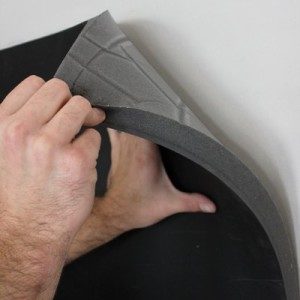
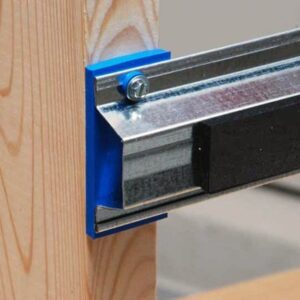
For renovation projects, Quiet Barrier® HD Soundproofing Composite adds mass, while isoTRAX® decouples drywall from the structure. If the wall cannot be opened, some barriers can be added over existing drywall, but installation may still require fastening and landlord approval.
Learn more about how to soundproof a wall.
Floors
Floor noise is often impact sound from footsteps, dropped objects or moving furniture. For renters, area rugs and carpet runners can soften footfall noise without altering the floor.
For a more substantial treatment, soundproofing underlayment is installed beneath finished flooring to help reduce sound transmission through the assembly. Rugs mainly address impact created at the surface; they do not perform the same role as underlayment installed within the floor system.
Because installation generally requires removing flooring, underlayment is better suited to owners, renovations or approved projects. Learn more about how to soundproof a floor.
Ceilings
Footsteps, furniture movement and dropped objects from the apartment above are typically impact noise traveling through the floor-and-ceiling assembly. Effective ceiling treatments may combine mass, damping and decoupling to reduce vibration and sound transfer.
Because these systems usually require access to or modification of the ceiling, renters will often need approval. Acoustic panels can reduce echo inside your room, but they are not a substitute for treating structural noise from above.
If noise is primarily coming from above, see how to reduce noise from upstairs neighbors or explore how to soundproof a ceiling.
Doors
Sound can travel easily through gaps around a door, so sealing is the first priority. Door sweeps and acoustic seals help close openings around the threshold and perimeter without major construction.
Sealing works best when the door itself has enough mass; lightweight or hollow interior doors may remain a weak point even after gaps are closed. Apartment entry doors can also be subject to building and fire-safety requirements, so check your lease or building rules before making modifications.
Learn more about how to soundproof a door.
Windows
Windows are a common path for traffic, construction, public transportation and other outside noise. Start by sealing gaps around the frame, then consider treatments that add mass over the opening.
Removable window plugs made with soundproofing composites can provide more blocking than heavy curtains alone and may work for some renters. Heavy curtains can help soften reflected sound but generally offer less sound blocking than a fitted plug.
However, window treatments have limits if sound is also traveling through surrounding walls, floors or ceilings. Explore more options in our guide on how to soundproof a window.
How to Soundproof a Room in Your Apartment
If you only need to soundproof one room, start with the space where noise causes the biggest problem. Identify the dominant noise path, check doors and windows for gaps, then address the most active wall, floor or ceiling.
Bedrooms are a common starting point. If traffic interrupts sleep, focus on the windows. If you hear conversations or television next door, prioritize the shared wall. Footsteps from above point to the ceiling assembly.
Treating the most disruptive path in one room is often more practical than trying to soundproof the entire apartment at once. You can then expand your soundproofing plan if needed.
Apartment Soundproofing FAQs
Can you actually soundproof an apartment?
Yes. You may not be able to eliminate every sound, but you can significantly reduce unwanted noise by identifying how it travels and treating the right surface. Renters can use removable solutions, while owners or tenants with approval have access to more permanent wall, floor and ceiling treatments.
What is the most effective way to reduce noise in an apartment?
Start with the dominant noise path. Airborne sound often requires mass and sealing, while impact noise may require damping or decoupling within a floor or ceiling assembly. The most effective apartment soundproofing often combines these methods rather than relying on one product.
What can I do to block neighbor noise without touching the walls?
Seal gaps around doors and windows, add a door sweep where permitted and use rugs to reduce floor impact noise. A full bookcase against a shared wall may add a small amount of mass, but it will not replace dedicated wall soundproofing when noise is traveling directly through the wall assembly.
Do acoustic panels work in apartments?
Yes, but they serve a different purpose. Acoustic panels absorb reflected sound to reduce echo and reverberation inside a room. They are not designed primarily to block neighbor noise traveling through shared walls, floors or ceilings. Transmission problems usually require mass, damping, decoupling or sealing.
Are newer apartments more soundproof than older ones?
Not necessarily. Sound isolation depends more on wall, floor and ceiling construction, materials, structural connections and gaps than on a building’s age. Apartments also do not automatically have soundproof walls; performance can vary significantly from one building to another.
Does adding rugs and furniture help reduce apartment noise?
Yes, within limits. Rugs can soften footsteps and reduce some impact noise, while upholstered furniture can absorb reflected sound within a room. Furniture against a shared wall may add a little mass, but these measures are best used as part of a broader soundproofing plan rather than as complete solutions.
Find the Right Soundproofing Solution for Your Apartment
Apartment noise problems are rarely one-size-fits-all. The right solution depends on the type of noise, how it is traveling and what changes you can make to your space.
If you are not sure where to start, complete our Soundproofing Questionnaire. Tell us what you are hearing, where the noise is coming from and which surfaces you can access, and the Soundproof Cow team can help narrow down the right approach.
For more complex problems, request a Free Acoustic Analysis for personalized recommendations.
Ready to speak with an expert?
We are here to help! The fastest way to find a solution is to call us: 1-866-405-7794.
Want to Improve the Sound Inside Your Apartment?
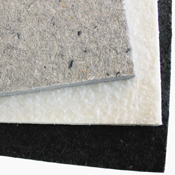
If the problem is echo, reverberation, or poor sound quality within the room rather than noise traveling between apartments, sound absorption products can help.
-

ADAPT® Acoustical Treatments
Learn MoreRequest a Quote -

Echo Absorber™ Acoustic Panel (Natural Blend – 1″x4’x4′)
Price range: $45.99 through $275.94Shop Now -
Echo Absorber™ Acoustic Panel 2″ (Case of 8)
$559.92Shop Now -
Udderly Quiet® Fabric Covered Foam 1″
Learn MoreShop Now -
Udderly Quiet® Fabric Covered Foam 2″
Learn MoreShop Now


I just wanted to send a quick thank you for your rapid response and helpfulness. I very much appreciated it. You have been responsive in every way all through the process. It has been a pleasure doing business with you and your company.
- T. Alexander