0 ItemsView Cart

Updated on August 24, 2026
Sound absorbing materials can reduce echo, reverberation and reflected noise, but different materials are designed for different rooms and applications. This guide explains how sound absorption works, the main types of materials available and what to consider when choosing a solution.
By the end, you should have a better understanding of which material category fits your space and whether absorption is the right approach for the noise problem you are trying to solve.
How Does Sound Work?
Sound waves are created by vibrations. For example, when someone sings, their vocal cords vibrate and send waves through the air to the listener. Higher-frequency sounds consist of shorter sound waves, while lower-frequency sounds contain longer waves.
Higher-frequency sounds do not bend as easily around barriers and may reflect from thinner materials. Lower-frequency sound waves are generally more difficult to control and can pass through or around lightweight materials more easily. In general, sound loses some energy as it passes through walls, materials and other obstructions.
Noise is unwanted sound. Inside a room, noise can become more noticeable when sound is not absorbed and continues reflecting from walls, ceilings, floors and other hard surfaces. This is why sound absorbing materials can be useful in rooms with excessive echo or reverberation.
You can compare the absorption performance of different products by reviewing their Noise Reduction Coefficient, or NRC rating. In general, a higher NRC indicates that the material absorbs more sound across the frequencies included in the test. The material’s thickness, coverage, placement and installation method will also affect the result.
How Do Sound Absorption Materials Work?
When a sound wave reaches a surface, the sound may be reflected, absorbed or transmitted through the material. Hard surfaces tend to reflect a greater portion of the sound back into the room. Porous, fibrous and open-cell materials allow sound waves to enter the material instead.
As the sound moves through the small pores or fibers, friction converts a small amount of the acoustic energy into heat. The amount of heat is minimal, but the process reduces the energy available to create additional reflections. This can shorten reverberation time, improve speech clarity and make the room more comfortable to use.
The goal is not always to eliminate every reflection. An auditorium or performance space, for example, may need some reverberation to help music carry naturally. A classroom, conference room or call center usually needs less reflected sound so people can understand speech more easily. Effective acoustic treatment creates the right balance for the way the room is used.
Sound absorption is useful anywhere reflected sound makes a space noisy, echoey or difficult to understand. The right material depends on the frequencies involved, the amount of absorption needed and where the material can be installed.
What Are the Best Sound Absorbing Materials?
The best sound absorbing material depends on the space, the frequencies you need to control and where the material will be installed. Acoustic foam, mineral wool, acoustic cotton, hanging baffles, acoustic partitions and specialty acoustic panels can all absorb sound effectively, but each is better suited to different applications.
Here’s how the main types of sound absorbing materials compare:
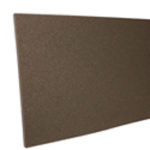
- Acoustic Glass Mineral Wool: Uses dense networks of fibers to absorb sound. These materials are highly customizable and can be installed on walls, ceilings, inside equipment or as part of a finished acoustic panel. They are commonly used in residential, commercial and industrial applications.
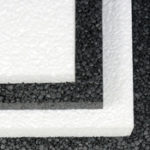
- Acoustic Foam: Lightweight, affordable and easy to install. Its open-cell structure allows sound waves to enter the material, making it useful for reducing echo in studios, offices, theaters, equipment enclosures and utility spaces. Foam is available with different colors, protective facings and fire ratings.
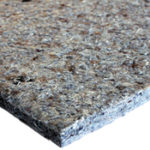
- Acoustic Cotton: Made primarily from recycled natural fibers. Cotton panels and baffles are lightweight, easy to handle and suitable for temporary or permanent installations. They can be useful in offices, classrooms, studios, gymnasiums and warehouses.
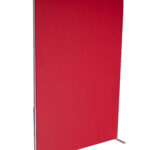
- Acoustic Partitions: Freestanding and movable. They reduce reflected background noise while allowing a room to be divided without building permanent walls.
- Hanging Baffles: Suspend from the ceiling and are useful when wall space is limited. They are commonly installed in rooms with high ceilings, including auditoriums, gymnasiums, cafeterias and industrial facilities.
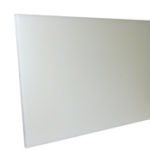
- Water-Resistant and Specialty Acoustic Panels: Designed for environments involving moisture, heat, cleaning, chemicals, impact or fire-rating requirements. This category includes water-resistant panels, fire-rated melamine foam and acoustic foam with protective surface facings.
The table below compares Soundproof Cow’s foam, mineral wool, cotton, partition, baffle and specialty-panel options so you can match the material type to your application.
Compare Sound Absorbing Materials
| Material | Best For | Key Considerations | Common Applications |
| Acoustic Glass Mineral Wool | Broad-frequency sound absorption | Typically installed on walls or ceilings and may be covered for a finished appearance | Walls, ceilings, equipment and commercial spaces |
| Acoustic Foam | Reducing echo and reflected sound | Available in different thicknesses, shapes and finishes for different applications | Studios, home theaters, offices and equipment enclosures |
| Acoustic Cotton | Sound absorption in finished residential and commercial spaces | Available as panels and baffles, including options made from recycled fibers | Offices, classrooms, studios, conference rooms and theaters |
| Acoustic Partitions | Flexible or temporary acoustic treatment | Freestanding and movable where permanent installation is not practical | Offices, conference rooms, restaurants and study spaces |
| Hanging Baffles | Large rooms with limited wall space | Suspended from ceilings to provide sound absorption without using wall area | Gyms, warehouses, cafeterias, auditoriums and industrial spaces |
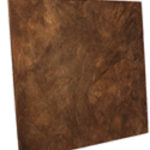
| Water-Resistant and Specialty Acoustic Panels | Moisture, heat, washdown or other demanding environments | Choose the material based on the environmental and performance requirements of the space | Pools, food preparation areas, medical facilities and industrial spaces |
1. Acoustic Glass Mineral Wool
Choose mineral wool when you need a lightweight, customizable material that can be used on walls, ceilings, inside equipment or as part of a larger acoustic treatment.
Our acoustic glass mineral wool panels offer a lightweight solution for highly customizable sound absorption. Mineral wool is made from natural rock materials spun into a fibrous structure. Each panel provides consistent sound absorption and can be cut to fit different room sizes, budgets and applications.
The panels are:
- Completely made to order
- Available in 1-inch and 2-inch thicknesses
- Made from materials suited to acoustic applications
Benefits include:
- Lightweight construction
- Straightforward installation
- Budget-friendly options
- Customizable and versatile sizing
- Reduced unwanted reverberation
- Additional thermal and energy-efficiency benefits
- Natural fire resistance
- Resistance to moisture absorption
Musicians and audiophiles may use acoustic glass mineral wool to reduce reverberation, ringing and other unwanted reflections in a music space. The panels can also be used:
- Inside noisy equipment or appliances
- As ceiling panels
- As part of office partitions
- In machine rooms
- Inside heating and cooling equipment
- In other spaces where sound absorption is needed
2. Acoustic Foam
Choose acoustic foam when you want an affordable, lightweight material that is easy to install in residential, commercial or equipment applications.
Acoustic foam can help improve sound quality by reducing reflected sound inside a room or enclosure. Many foam products are available with peel-and-stick backing, protective facings, different colors and specialty performance features.
Polyester Film-Facing Acoustic Foam
Polyester film-facing panels are made from polyurethane foam and designed to provide sound absorption and insulation with minimal thickness. The protective film surface makes the material useful in locations where exposed foam may need added durability.
The 1-inch panels have an NRC of 0.65, while the 3-inch panels have an NRC of 1.15.
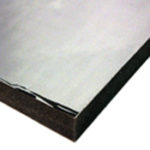
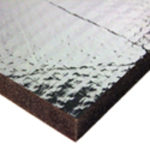
Reinforced Aluminum-Facing Acoustic Foam
Reinforced aluminum-facing panels offer additional protection in high-heat environments and are resistant to tearing. They provide the sound absorbing qualities of acoustic foam with a more durable surface for demanding applications.
Colored Acoustic Foam Panels
Flexible polyurethane foam panels are available in colors ranging from aqua to pumpkin, allowing buyers to coordinate the material with the room. The panels absorb sound inside the space and help reduce unwanted reflections.
The 2-inch panels have an NRC of 1.00.
Udderly Quiet® Fabric-Covered Foam Panels
Udderly Quiet® fabric-covered foam panels provide acoustic performance with a more finished appearance. They can be installed in auditoriums, theaters and other spaces where reducing echo is important.
The panels are versatile and easy to install. Their fabric is mildew-resistant, easy to clean and available in several colors to complement the surrounding décor.
Class A™ Fire-Rated Acoustic Foam
Class A™ acoustic foam is made from lightweight melamine foam and designed for environments with higher heat or fire-rating requirements. The material can be used in temperatures reaching up to 482 degrees Fahrenheit and is available with peel-and-place backing.
A 2-inch panel has an NRC of 0.80. These panels are appropriate for medical facilities, equipment areas and other environments where standard polyurethane foam may not meet the application requirements.
Acoustic foam may be used in:
- Auditoriums
- Engine compartments
- Gymnasiums
- Manufacturing facilities
- Medical facilities
- Offices
- Recording studios
- Theaters
- Utility rooms
- Workshops
Acoustic foam is affordable, easy to install and available in several finishes. It can reduce reverberation and improve sound quality in residential, commercial and equipment applications.
3. Acoustic Cotton
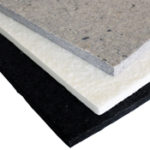
Acoustic cotton absorbs reflected sound using dense fibrous material and is commonly used for wall panels, ceiling treatments and hanging baffles. It is a versatile option for offices, studios, classrooms, conference rooms and other spaces where reducing echo and reverberation is the goal.
Echo Absorber™ Acoustic Cotton Panels
Echo Absorber™ panels and baffles are made from 80% recycled materials. The natural-fiber panels help control reflected sound while offering resistance to mold, mildew and flame. They can be used in temporary or permanent installations.
The lightweight materials are easy to install and offer several thickness and size options.
Echo Absorber™ Acoustic Panel Natural Blend: These panels contain no volatile organic compounds, are made from recycled cotton and carry a Class A rating. They can be mounted to flat surfaces or wrapped around curved walls and columns to reduce reverberation. Thermal bonding helps the panels resist tears and impact. A 2-inch panel has an NRC of 1.00.
Echo Absorber™ Acoustic Panel Packs: Packs of three, six or fourteen panels provide options for treating larger spaces. A case of three covers up to 24 square feet and has an NRC of 1.15.
Echo Absorber™ panels are suitable for:
- Auditoriums
- Call centers
- Conference rooms
- Computer rooms
- Gymnasiums
- Offices
- Studios
- Theaters
- Warehouses
Benefits include:
- Cost-effective sound absorption
- Compatibility with many building requirements
- Resistance to fungi, mold, mildew and flame
- Recycled and environmentally conscious material content
Shop Echo Absorber™ Acoustic Cotton Panels.
4. Acoustic Partitions
Choose acoustic partitions when you need to reduce reflected background noise while dividing a room without permanent remodeling.
Udderly Quiet® Acoustic Partitions
An acoustic partition provides a flexible sound absorbing solution when you want to divide a room into smaller spaces without the cost and disruption of constructing permanent walls.
Udderly Quiet® freestanding acoustic partitions are lightweight and easy to move when the layout of a room changes. They are available in a range of colors for offices, restaurants, schools and other shared environments.
Features include:
- Standard dimensions of 4 feet by 5 feet
- Custom sizes available
- A 60% recycled acoustic mineral wool core
- 100% recycled acoustic fabric options
- NRC rating of 1.00
Acoustic partitions are appropriate for:
- Conference spaces
- Hotels
- Offices
- Restaurants
- Study rooms
- Other rooms that need flexible separation and improved acoustics
Benefits include:
- Flexible placement
- Reduced reflected background noise
- A temporary or movable acoustic solution
- Customization options
- Improved privacy
- Straightforward setup and relocation
- Fabric choices that can coordinate with the room
- Class A-rated options
- Durable and versatile construction
5. Hanging Baffles
Choose hanging baffles when you need absorption but have limited wall space or want to use the open ceiling area in a large room.
Sound Absorbing Hanging Baffles
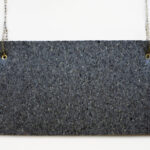
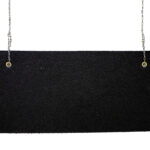
Hanging baffles suspend from the ceiling to control reflected sound without taking up wall or floor space. They can blend into the surroundings or become a visible design feature through custom coverings and fabric selections.
Udderly Quiet® Acoustic Baffle 250 Series
The Udderly Quiet® 250 Series includes an internal aluminum frame for greater stability and consistent acoustic performance. Environmentally conscious covering options allow the baffles to add color and style to the room.
The 1-inch baffle has an NRC of 0.80.
Udderly Quiet® Acoustic Baffle 200 Series
The 200 Series works well in smaller spaces and is available in sizes reaching up to 3 feet by 6 feet. Buyers can choose rounded or square corners.
The 2-inch baffle has an NRC of 1.10.
Echo Absorber™ Hanging Baffle Natural Series
Echo Absorber™ hanging baffles provide a cost-effective way to reduce unwanted reverberation. The natural-series baffles are made primarily from recycled materials and are available as 1-inch-thick, 4-foot-by-4-foot panels.
They are suitable for noisy environments such as cafeterias and gymnasiums.
Echo Absorber™ Hanging Baffle Packs
One-inch baffles are available in packs of six or fourteen with an NRC of 0.85. Two-inch baffles are available in packs of eight with an NRC of 1.15.
Udderly Quiet® Class A™ Anechoic Hanging Baffles
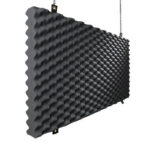
Class A™ anechoic hanging baffles have an open-cell structure and are designed for high-heat areas or environments where sparks may occur. The baffles are 3 inches thick and made from melamine foam.
Hanging baffles can be used in:
- Auditoriums
- Gymnasiums
- Call centers
- Offices
- Industrial facilities
- Rooms with limited wall space
The baffles are installed with hanger wire or chains and hooks and can be used in residential, retail, commercial and government applications. Because they are suspended, the installation does not require acoustic backing or significant wall modifications.
Benefits include:
- Use of otherwise open ceiling space
- Straightforward installation
- Durable acoustic materials
- Improved sound quality in rooms of various sizes
6. Water-Resistant and Specialty Acoustic Panels
Choose specialty panels when the material will be exposed to moisture, stains, chemicals, cleaning, impact, high heat or other conditions that ordinary acoustic products may not tolerate.
Quiet Board™ Water-Resistant Panels
Quiet Board™ provides a water- and stain-resistant sound absorbing option for spaces where washable materials are necessary.
The panels feature:
- 1-inch and 2-inch thickness options
- Cases of three or seven for 2-inch panels
- Cases of six or thirteen for 1-inch panels
- An irregular surface texture that absorbs airborne sound
- A polypropylene core
- Class A performance
Quiet Board™ panels can be used in:
- Arenas
- Car washes
- Dog kennels
- Food preparation areas
- Gymnasiums
- Indoor swimming pools
- Laboratories
- Medical facilities
- Rooftop enclosures
- Skating rinks
- Ceiling and underfloor applications where appropriate
Benefits include:
- Durable, water-resistant construction
- Resistance to chemicals, bacteria and fungi
- Impact resistance
- Washable surfaces
- Lightweight installation
- Easy cutting and trimming
- Custom-shape possibilities
Shop Quiet Board™ Water-Resistant Panels.
What to Consider When Choosing Sound Absorbing Materials
The best sound absorbing material is not automatically the product with the highest NRC rating. The right choice depends on the noise problem, installation location, room conditions, appearance and level of flexibility you need.
Where Will You Install the Material?
The available surface will help narrow the options.
Wall-mounted foam, cotton and fiberglass panels work well when open wall space is available. Hanging baffles use ceiling space in gymnasiums, warehouses, restaurants and other large rooms. Freestanding partitions are useful when the layout needs to remain flexible.
Mineral wool, faced foam and specialty materials can also be installed inside equipment, machinery or mechanical enclosures where a standard decorative panel may not fit.
How Much Absorption Does the Room Need?
Review the NRC rating, material thickness and total coverage together.
NRC indicates how much sound a material absorbs under tested conditions, but it does not determine the number of panels a room needs. A small office may require only targeted treatment at the main reflection points. A gymnasium, auditorium, or industrial room may require coverage across larger portions of the walls and ceiling.
Thicker materials generally provide more useful absorption across a broader frequency range, but the product’s test data should guide the decision.
Does the Environment Have Special Requirements?
Consider whether the space involves:
- Moisture or humidity
- Frequent cleaning
- Food preparation or sanitation requirements
- Chemicals
- Impact
- High temperatures
- Fire-code requirements
Quiet Board™ may be a better option in a humid or washable area, while melamine foam or faced acoustic foam may be more appropriate around high heat or equipment.
A material that performs well acoustically is still the wrong choice if it cannot safely remain in the environment.
What Should the Treatment Look Like?
Appearance matters in bedrooms, offices, restaurants, studios, theaters and other occupied spaces.
Exposed foam and natural cotton provide practical options for studios, utility areas and equipment rooms. Fabric-covered foam, partitions and custom baffles offer more finished choices for visible residential and commercial spaces.
Consider color, shape, edge treatment, fabric and mounting style before selecting the final product.
Does the Treatment Need to Move?
Mounted panels and ceiling baffles work well for long-term treatment. Freestanding partitions provide more flexibility when a room’s layout changes.
Cotton panels and other lightweight materials may support temporary or permanent installation depending on the mounting method. Consider how the room may be used in the future before choosing a fixed treatment.
Frequently Asked Questions
What Is the Most Effective Sound Absorbing Material?
The most effective sound absorbing material is the one that fits the room, frequency range and installation needed. Mineral wool, fiberglass, acoustic cotton and thicker acoustic foam can all provide strong absorption when properly selected and installed. Compare NRC ratings, but also consider material thickness, total coverage and placement. A product with a high NRC will not correct the room if too little material is used or it is installed away from the primary reflection points.
What Is the Difference Between Sound Absorption and Soundproofing?
Sound absorption reduces echo and reverberation inside a room, while soundproofing reduces sound passing between rooms or entering from outside. Foam, cotton panels, mineral wool and hanging baffles are used primarily for absorption. Soundproofing generally requires dense barriers, sealed gaps, isolation or changes to the full wall, ceiling or floor assembly. Some spaces need both approaches because they address different parts of the noise problem.
What Materials Absorb Sound in a Home?
Common sound absorbing materials for homes include acoustic foam, recycled cotton panels, mineral wool, and acoustic panels. Rugs, upholstered furniture and heavy curtains can also absorb some reflected sound, although they do not provide the same tested or predictable performance as dedicated acoustic products. Finished acoustic panels are often appropriate for home offices, theaters and studios where appearance matters. The best option depends on the amount of echo, available surface area and room design.
What Is an NRC Rating?
NRC stands for Noise Reduction Coefficient and represents the average amount of sound a material absorbs across a group of tested frequencies. A higher NRC generally indicates greater absorption under the test conditions. NRC should be reviewed alongside the material’s thickness, installation method and total coverage. It does not indicate how well the product blocks sound from traveling into another room.
Can Sound Absorbing Materials Help With Soundproofing?
Yes. Sound absorbing materials can be part of a broader noise-control plan, but their primary purpose is to reduce reflections, echo and reverberation within a space. If you also need to reduce sound traveling through walls, ceilings, floors, doors or windows, you may need additional soundproofing materials or construction methods.
What Are the Best Sound Absorbing Materials for a Home Studio?
Acoustic foam, mineral wool, recycled cotton and acoustic panels can all work well in a home studio. The best material and placement depend on the room dimensions, speaker position, recording setup, and frequencies causing problems. Thicker panels generally provide broader-frequency absorption, while thinner foam is often used to manage higher-frequency reflections. A studio may also require separate soundproofing if the goal is to keep music from reaching the rest of the home.
Shop Sound Absorbing Materials With Soundproof Cow
Soundproof Cow offers sound absorbing materials for builders, architects, homeowners and commercial buyers. Our product selection includes acoustic foam, mineral wool, recycled cotton, hanging baffles, freestanding partitions and water-resistant specialty panels.
We use carefully selected acoustic products designed to provide value across a range of residential, commercial and industrial applications.
One of our most useful services is a Free Acoustic Analysis. Our team can review your situation, explain the available options, and recommend materials that fit your space.
Soundproof Cow also offers No Bull specials on select products so customers can find discounted materials for qualifying projects.
Still unsure which sound absorbing material is best? Our Account Managers can help you compare materials, identify the right product category and create a practical plan for your space. Call 1-866-405-7794 today.
Learn More About Understanding Sound
- Understand Sound Ratings
- What Is Reverberation of Sound?
- What Is Sound Isolation?
- Impact Noise vs. Airborne Noise
- What Is Sound Diffusion?
- How to Determine the STC Rating of a Wall
- Echo vs. Reverberation
- What Is Sound?
- Colors of Noise
- Benefits of White Noise
- What Are the Characteristics of a Sound Wave?
- What Is Sound Masking?

About Kellen Beaver